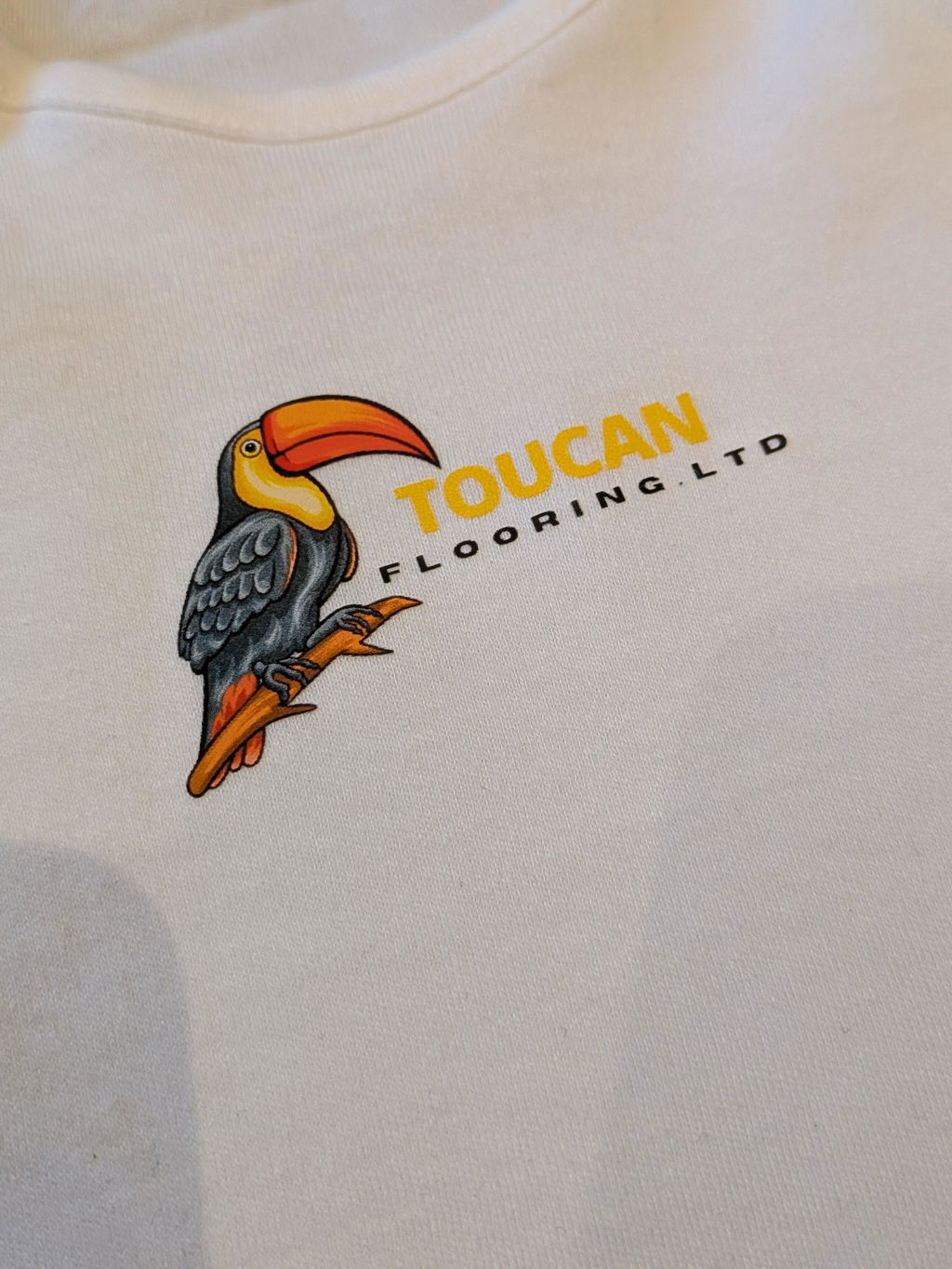
Can I Press DTF Transfers With a Home Iron?
Yes — you can apply DTF transfers with a household iron. Here's the exact step-by-step method our team recommends: max heat, firm even pressure, parchment paper, a little extra time and a cold peel — plus why a proper heat press still gives the most reliable, long-lasting results.
“Hello, can I press this DTF with a home iron?” — it’s one of the most common questions we get at DTF.UK. The honest answer is yes, you can. Plenty of people get great results on the kitchen table with nothing more than a household iron and a sheet of baking paper. There’s a right way to do it, though — and a proper heat press will always give you the most reliable, longest-lasting finish.
Here’s the exact method our team recommends when a heat press isn’t an option (yet).
First — why we recommend a proper heat press
A household iron can do the job, but it was never designed for heat transfers. A dedicated heat press wins on the three things that actually make a transfer bond:
Even, accurate heat
A press holds a precise, steady temperature across the whole plate. An iron has hot and cold spots and no real thermostat.
Consistent pressure
A press applies firm, even pressure everywhere at once. With an iron you can only press one small area at a time.
Reliable timing
A press counts the exact seconds for you, so every single transfer comes out identical.
If you’re applying transfers regularly — or selling them — a press pays for itself quickly. See our guide: Which Heat Press Should You Buy?
What you’ll need
- A household iron — used dry, with steam switched off.
- Your DTF transfer — trimmed and ready to position.
- Parchment / baking paper (or a thin cotton cloth, or a Teflon sheet if you have one) to cover the transfer.
- A hard, flat, heat-safe surface — not a springy ironing board. A wooden board or firm table protected with a towel works best.
- A folded towel or pillowcase as a firm, flat base layer under the garment.
Iron settings at a glance
Step-by-step: applying DTF with a home iron
🔥 Set the iron to maximum — and turn steam OFF
Empty the water tank and switch off steam. Steam adds moisture, which is the enemy of a clean transfer. Turn the dial to the hottest setting (cotton/linen) and let the iron heat up fully for a few minutes.
🌬️ Pre-press to remove moisture & wrinkles
Lay the garment on your firm, flat surface and iron the target area for 10–15 seconds. This drives out any moisture and flattens creases, so the transfer lands on a smooth, dry base.
👕 Position the transfer & cover with parchment
Place the transfer film-side down, exactly where you want it. Then cover it completely with a sheet of parchment / baking paper so the iron never touches the film directly.
💪 Press firmly — and evenly
Push down hard — use your body weight, not just your arm. Hold the iron flat and still over each area for 15–20 seconds, then move to the next section with a slight overlap. Cover the whole design, including every edge and corner. Don’t glide it like you’re ironing a shirt: press, lift, reposition, press.
🔄 Work the edges — then go again
Edges and corners lift first, so go back over them and press the tip of the iron in firmly. In total you’ll spend noticeably longer than the few seconds a heat press needs — that’s expected, because an iron runs cooler and covers a smaller area. When in doubt, give it a little more time.
🧊 Let it go fully COLD — then peel
This is the big one with an iron: don’t peel warm. Let the transfer and film cool completely to room temperature before peeling — even if it’s normally a warm-peel transfer. A cold peel gives the adhesive time to fully bond. Peel slowly from one corner; if any part lifts with the film, lay it back down, re-cover and press again.
📄 Final press to seal it in
Once peeled, cover the design again with parchment and give it one more firm 10–15 second press. This locks everything down and leaves a smoother, more durable finish.
Pro tips for the best iron results
- Test first on a scrap of fabric or an inside hem whenever you can.
- Smaller is easier. Pocket logos, names and small designs iron far more reliably than big full-front prints.
- 100% cotton is the most forgiving. For polyester or blends, max heat can scorch — drop the temperature slightly, add a little time, and always test first.
- Stay still while pressing each area, but reposition between areas — never drag a hot iron across the film.
- A firm surface matters as much as heat. A springy ironing board robs you of the pressure you need.
Ready to print?
Our DTF transfers are made to apply easily — whether you’re using a press or an iron. Order with no minimum, same-day dispatch before 13:00, and grab a free sample pack to practise your technique. Got a question about your specific garment? Drop us a message — we’re always happy to help you get a perfect press.